Is Trump’s State of the Union a Turning Point or Just Another Political Speech?
Written by Peter Boykin on February 26, 2026






Is Trump’s State of the Union a Turning Point or Just Another Political Speech?
#GoRightNews Shared by Peter Boykin
American Political Commentator / Citizen Journalist / Activist / Constitutionalist for Liberty
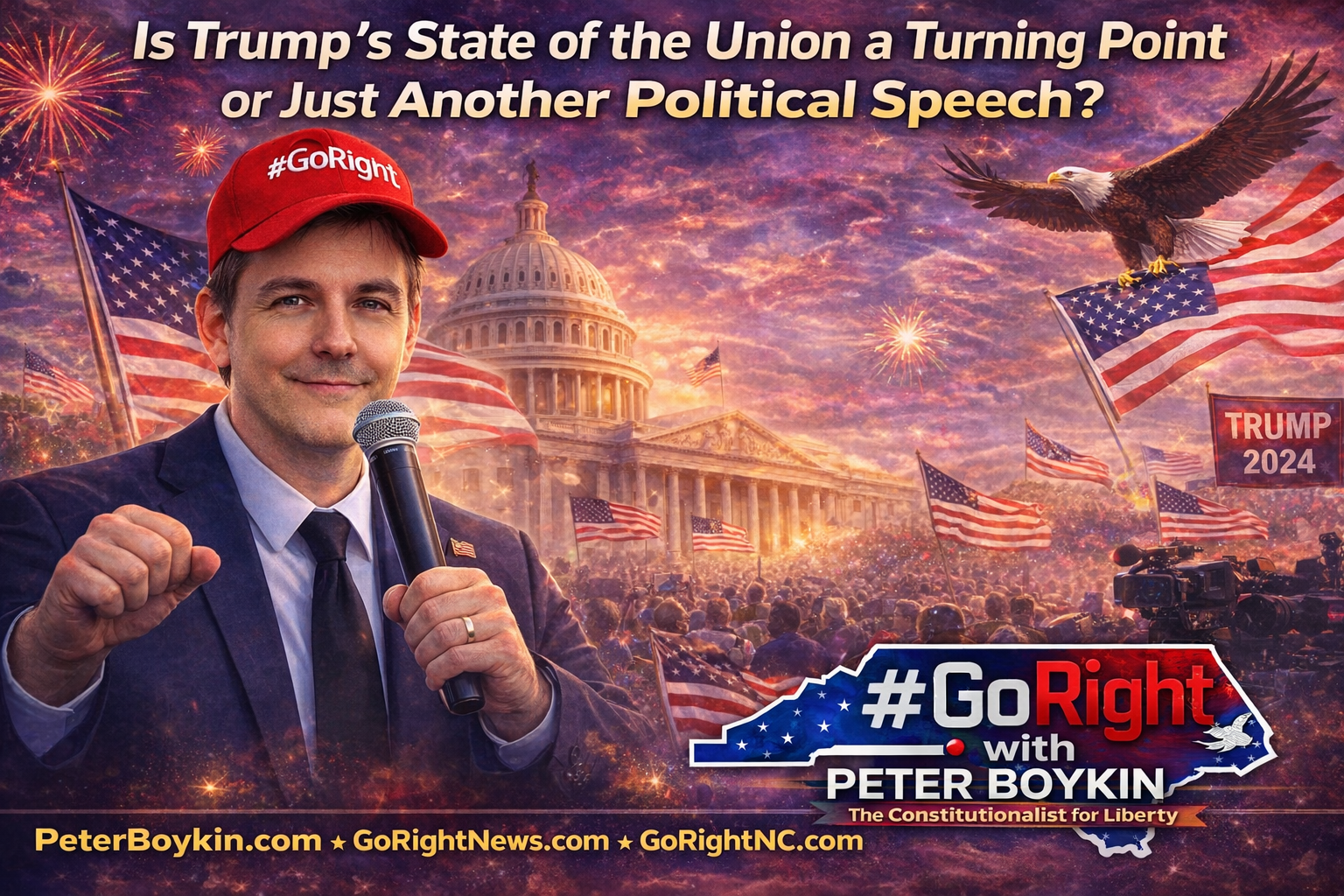 Is Trump’s State of the Union a Turning Point or Just Another Political Speech?
Go Right with Peter Boykin: The Constitutionalist for Liberty
A quiet moment before a major speech often tells you more than the speech itself. Lawmakers gather, cameras wait, pundits prepare their prewritten reactions, and across America people either lean forward with hope or lean back with skepticism. That tension is the real State of the Union, not just the words spoken at the podium, but the expectations of a nation that feels divided between competing visions of its future.
The recent State of the Union from President Donald Trump was not just a policy speech. It was a signal flare aimed at the entire political system, from federal power struggles to local elections shaping communities across the country. In a Constitutional Republic, speeches like this are less about ceremony and more about direction. The real question is how those themes translate into action at every level of government.
A Vision Framed as a “Golden Age” and Economic Reset
Trump framed the country as entering a renewed era of prosperity, describing an economic turnaround and emphasizing tariffs, tax policy, and domestic production as drivers of national strength.
Supporters see this messaging as reaffirming a populist economic approach focused on American workers, trade leverage, and rebuilding manufacturing strength. Critics argue the speech leaned more toward political theater than detailed policy solutions, highlighting positive indicators while many Americans still struggle with affordability pressures.
This tension reflects a deeper reality. Federal policy narratives often collide with kitchen table economics. Inflation concerns, housing costs, and rising energy bills remain front of mind for voters regardless of political affiliation.
From a constitutional perspective, the executive branch proposes direction, but Congress determines whether that direction becomes law. That creates a fundamental link between national messaging and midterm election dynamics.
Immigration, Security, and Foreign Policy as Political Anchors
Border security and immigration enforcement were central pillars of the address. Trump defended strict policies and positioned them as necessary for national sovereignty and public safety.
Foreign policy messaging also included warnings about global instability and international threats, framing international challenges as tests of American strength.
These issues matter politically because they activate different voter priorities. National security messaging energizes federal debates but also influences state and local decision-making, especially regarding law enforcement funding, sanctuary policies, and community safety initiatives.
In local elections, candidates frequently mirror federal talking points, translating global threats into local campaign language.
Economic Policy Proposals That Could Reach Local Communities
One notable policy element was a proposed government-backed retirement savings initiative designed to expand access for millions of Americans without employer plans.
If implemented through Congress, programs like this would ripple through state economies, affecting financial institutions, workforce planning, and local economic stability. Federal proposals often look abstract, but they eventually shape municipal budgets, public service costs, and long-term community growth.
Another announcement focused on shifting energy infrastructure costs away from consumers toward large technology companies operating energy-intensive data centers.
Even though experts say benefits may take years to reach households, the political messaging directly targets voters frustrated with high utility bills, showing how federal narratives connect to everyday financial realities.
Federal Messaging Meets Kitchen Table Reality
While national speeches emphasize broad economic indicators, many Americans continue to measure success through daily financial pressures. Rising costs, housing affordability, healthcare expenses, and local taxes remain defining issues for voters.
This gap between national messaging and lived experience is where elections are won or lost.
Federal leaders speak about macroeconomic direction. Local voters decide based on whether their communities feel safer, more affordable, and more stable.
The Midterm Shadow Over Every Word
State of the Union speeches are never just policy summaries. They are campaign roadmaps.
The address comes amid growing election pressure, with both parties preparing for contests that will determine legislative control and the administration’s ability to pass laws.
Midterm elections shape:
Congressional control determines legislative priorities.
State legislatures manage election laws, taxation, and education.
Local boards and municipal leadership are responsible for zoning, policing, and public services.
A presidential speech sets narrative direction, but local races decide whether that direction becomes reality.
From Federal Messaging to Local Consequences
The relationship between federal speeches and local governance often goes unnoticed.
Federal rhetoric influences:
State budget priorities through federal funding signals.
Local school board debates are shaped by national cultural narratives.
Law enforcement policy tied to immigration or crime discussions.
Energy infrastructure decisions impacting local utilities.
In a Constitutional Republic, power flows both upward and downward. Federal leadership provides themes. State and local leaders decide implementation.
Looking Ahead to 2028: The Next Political Battlefield
Beyond immediate policy debates, the speech also signals the beginning of the next political cycle. Political observers are already evaluating how its themes may shape future presidential contenders.
On the Republican side, potential candidates may attempt to carry forward a Trump-like populist message focused on economic nationalism, sovereignty, and outsider energy. On the Democratic side, emerging figures may emphasize institutional stability, social policy priorities, or alternative economic frameworks.
This dynamic highlights a broader shift in American politics. Elections increasingly revolve around competing narratives about identity and direction rather than purely technical policy debates.
The speech becomes more than a reflection of current leadership. It becomes a preview of the ideological battles that could define the 2028 election landscape.
Political Theater or Strategic Communication?
Observers noted that the speech relied heavily on patriotic storytelling and emotional framing alongside policy announcements.
This raises a fundamental question.
Is the State of the Union primarily a governing tool or a campaign stage?
The answer is likely both. Presidential messaging must simultaneously govern, persuade, and mobilize.
The State of the Union:
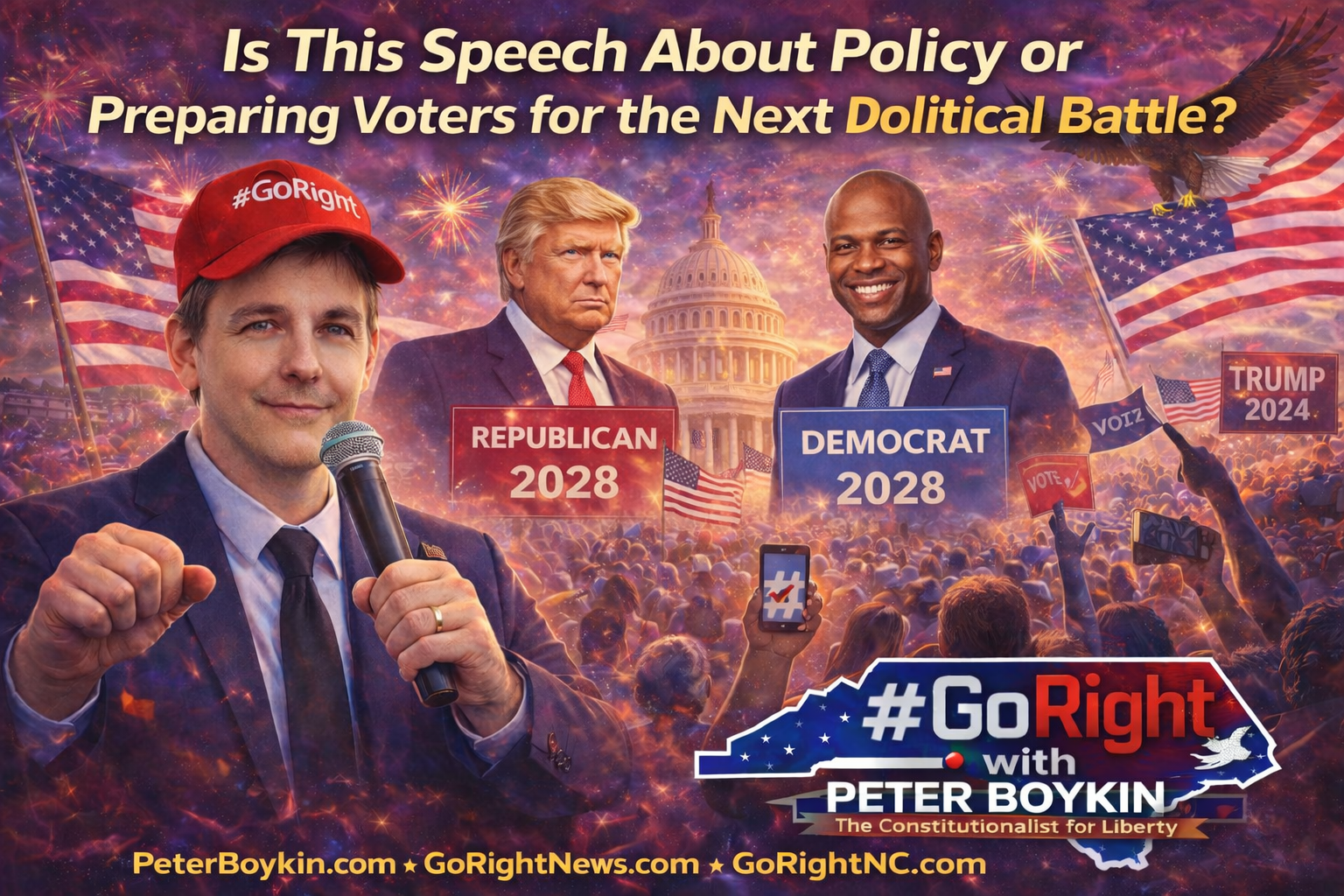
Is This Speech About Policy or Preparing Voters for the Next Political Battle?
When we talk about the State of the Union, most people think about applause lines, partisan reactions, and the immediate media spin that follows. But if you step back and look through the lens of a Constitutional Republic, something deeper is happening. The speech is not just a report card on where America stands. It is an attempt to define where America believes it is going, and more importantly, who gets to decide that direction.
This recent State of the Union felt less like a traditional policy briefing and more like a strategic map laid out for a political battlefield that stretches from Washington, D.C., all the way down to local school boards, county commissions, and state legislatures. Every major theme, whether economic nationalism, border security, energy independence, or global strength, was framed not only as a governing agenda but as a call to voters ahead of ongoing elections.
That matters because in our system, speeches do not change the country. Elections do.
A president can propose a vision, but Congress writes laws. States interpret those laws. Local governments apply them in ways that directly shape everyday life. So when you hear promises about tariffs or domestic manufacturing, that conversation eventually reaches local workers deciding whether factories reopen, small business owners facing supply chain costs, and city councils debating zoning or infrastructure expansion.
This is where the gap between national messaging and daily reality becomes visible.
Politicians in Washington talk about macroeconomic success. Meanwhile, Americans talk about grocery bills, rent payments, insurance costs, and whether their paycheck stretches far enough to cover the month. The speech leaned heavily into a narrative of national strength and recovery, but voters are not just evaluating economic charts. They are measuring their own lived experience.
And here is the paradox of modern politics.
Both sides claim to speak for ordinary Americans, yet many citizens feel disconnected from both parties. That frustration shows up not only in polling but in declining trust in institutions and increasing volatility in elections. People are not just choosing between left and right anymore. Many are choosing between engagement and disengagement.
The State of the Union attempted to reframe that relationship by presenting a strong executive vision, but the real question is whether voters believe that vision translates into meaningful change at the local level.
Because ultimately, federal speeches are symbolic. Local consequences are tangible.
When immigration is discussed at the federal level, sheriffs and mayors deal with enforcement realities. When energy policy is debated nationally, local utility rates and infrastructure decisions determine whether families can afford heating and electricity. When economic policies promise growth, state legislatures decide tax structures and regulatory frameworks that either encourage or limit that growth.
The speech also reflected the increasing shift toward narrative politics, where storytelling becomes as important as policy detail. Emotional framing, patriotic imagery, and strong language are designed not just to inform but to mobilize. Supporters hear affirmation of their values. Critics hear confirmation of their fears. And somewhere in the middle sits the independent voter trying to separate rhetoric from reality.
That independent voter may be the most important audience right now.
Because elections are no longer decided purely by party loyalty. They are decided by turnout, enthusiasm, and whether voters feel that anyone is actually addressing their real concerns. Rising costs, public safety, education quality, local economic opportunity, and government accountability are issues that cross ideological lines.
This is why the State of the Union cannot be viewed in isolation.
It is part of a larger cycle where federal messaging sets the tone, state leaders adapt that tone into legislation, and local candidates turn it into campaign slogans. The speech becomes a blueprint that echoes through campaign ads, town halls, and community debates.
And here is something worth thinking about.
Every time Americans focus only on presidential politics, they risk overlooking the levels of government that affect them most directly. School boards determine curriculum and policy for children. County officials manage budgets that impact roads, emergency services, and local taxes. State legislators shape election laws, business regulations, and criminal justice policy.
The presidency may be the loudest voice, but local government is often the strongest hand guiding daily life.
So what does this State of the Union actually represent?
It represents a moment where political leadership attempts to define national identity during a period of uncertainty. It represents an effort to energize supporters while challenging opponents. But above all, it represents a test of whether Americans still believe their participation matters.
Because in a Constitutional Republic, power ultimately flows from the people upward, not from leadership downward.
The speech sets the stage. The voters write the ending.
And that is the real State of the Union.
If you believe in liberty, accountability, and a government that serves the people instead of managing them, then the focus cannot stop at listening to speeches. It has to continue with participation, with engagement, and with making sure that from federal offices to local councils, the voices of citizens remain louder than the noise of politics.
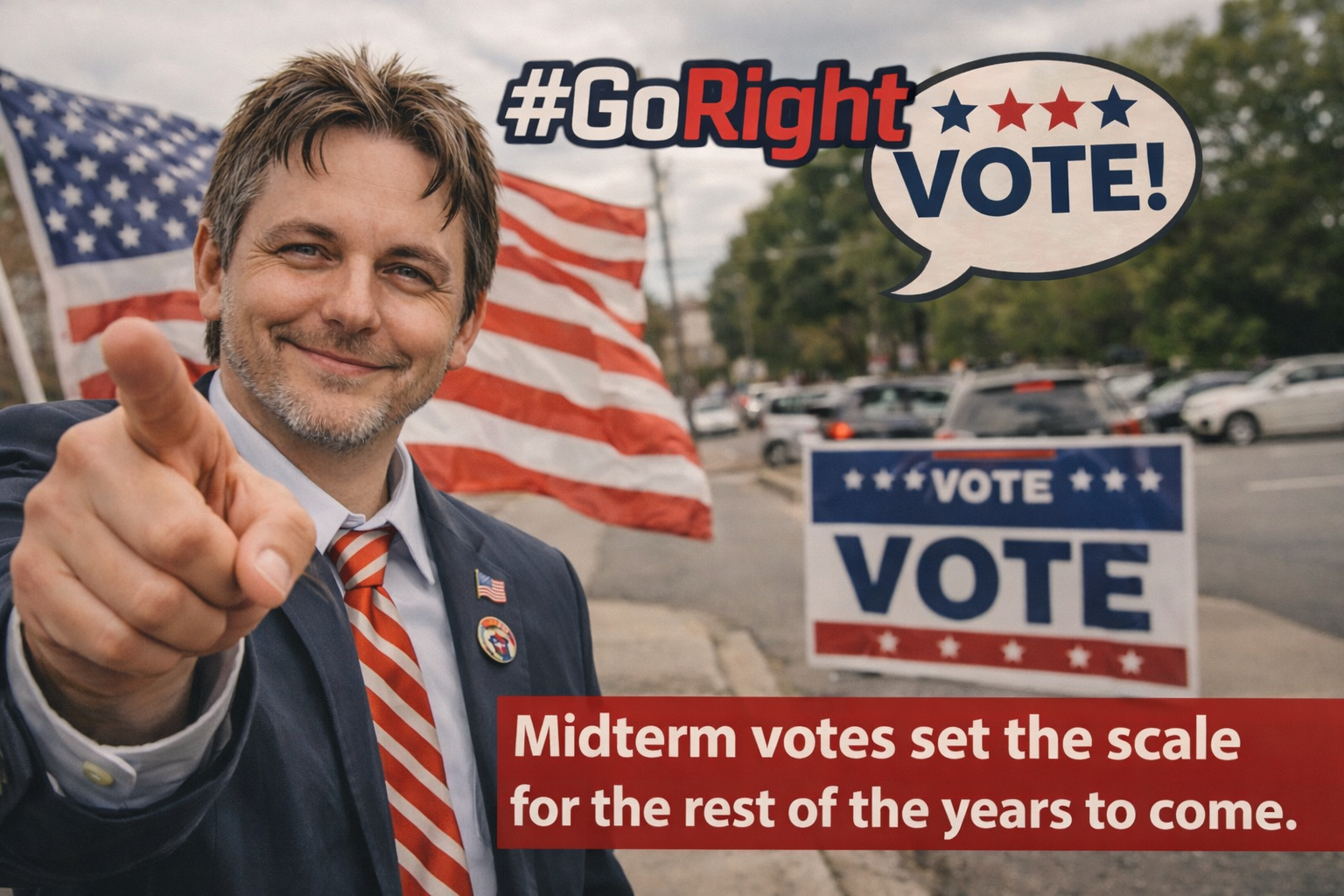
This is Go Right with Peter Boykin, the Constitutionalist for Liberty. Follow on all social media platforms, share the conversation, and let others know that the future of our Constitutional Republic is not decided by speeches alone. It is decided by what we do next.
#GoRight, #GoRightNews, #PeterBoykin, #ConstitutionalRepublic, #StateOfTheUnion, #TrumpSpeech, #MidtermsMatter, #FederalToLocal, #ElectionAnalysis, #Election2028, #PoliticalCommentary, #CitizenJournalism, #LibertyMovement
An in-depth Constitutionalist analysis of Trump’s State of the Union, examining how federal messaging connects to elections, policy direction, local government realities, and the emerging political battlefield toward 2028.

Call to Action
For daily commentary grounded in liberty, justice, and constitutional values, visit GoRightNews.com
Subscribe at Rumble.com/GoRightNews and Go Right with Peter Boykin Podcast – YouTube
📢 Listen and Subscribe:
Rumble | YouTube | Spotify | Apple Podcasts | Amazon | Truth Social | X | Facebook | GAB | TikTok
Follow #GoRight with Peter Boykin on
Go Right with Peter Boykin GoRightNews.com | Podcast on Spotify
and every major platform
SUPPORT THE PLATFORM
If you support independent media that holds power accountable, consider a donation at Cash App $GoRightNews.
Help us stay fiercely independent.
Donate at Cash App $GoRightNews
All donation links are at GoRightNews.com and PeterBoykin.com
Stay informed. Stay free. It is time to #GoRight.
At Go Right News, we know most critics won’t even read past the headline. Quick to judge, quicker to dismiss, just like the very bureaucrats we expose. Sure, we expect that from the Left. But too often, even conservatives skip the facts, shouting “fake news” without a second thought.
We’re not here to play into false binaries. Go Right News always stands to defend the Constitution, truthfully, unapologetically, and without fear of offending either side. We lean right, but we’re not afraid to call out extremism, hypocrisy, or double standards wherever they hide.
We give you the facts, the contrast, and the Constitutional context, because this is more than politics. It’s a movement.
It’s Time To #GoRight
#GoRight: More Than Politics: A Way of Life

#GoRight: More Than Politics, A Way of Life
#GoRight isn’t just about politics: it’s about doing what’s right in every aspect of life.
It’s about making choices that uplift, strengthen, and unite our communities.
It means:
✅ Doing Right: Standing for truth, integrity, and accountability.
✅ Thinking Right: Using logic, common sense, and fairness in decision-making.
✅ Being Right: Living with honor, respect, and responsibility.
✅ Voting Right: Electing leaders who put We the People first.
#GoRight is a direction: a call to action for all who believe in building, not destroying.
It’s about working toward a better future, together.
This Article is brought to you by Go Right News and edited by Peter Boykin
Visit GoRightNews.com for More Articles, and visit PeterBoykin.com to Learn more about Peter Boykin
 At Go Right News, we stand for facts, not fear. We believe in preserving our history, focusing on real policy, and cutting through the noise. The truth doesn’t need to be edited—it just needs to be heard. And if we’re going to win for America, it’s time to stop running to the sidelines and start charging down the field toward unity, prosperity, and liberty for all.
Web:

Kick:

Rumble:
https://rumble.com/c/GoRightNews
https://rumble.com/c/GoRightNewsVideos
https://rumble.com/c/GoRightNewsPodcast
https://rumble.com/c/GaysForTrump
https://rumble.com/c/PeterBoykin
YouTube:
https://youtube.com/@PeterBoykinForAmerica
https://www.youtube.com/@GoRightNews
https://www.youtube.com/@GoRightNewsChannel
https://www.youtube.com/@gorightnewsvideos
https://www.youtube.com/@gorightnc
https://www.youtube.com/@PeterBoykinForLiberty
https://www.youtube.com/@gaysfortrumporganization
https://www.youtube.com/@QiewNews
https://www.youtube.com/@GoForwardNews
Facebook:
https://www.facebook.com/boykin4congress
https://www.facebook.com/groups/gorightnews
https://www.facebook.com/GoRightNewsOfficial
https://www.facebook.com/PeterRBoykin
https://www.facebook.com/BoykinForNC
https://www.facebook.com/Boykin4NC
https://www.facebook.com/groups/boykinfornc
https://www.facebook.com/groups/PeterBoykinForCongress
https://www.facebook.com/groups/boykin4nc
https://www.instagram.com/peterboykin/
https://www.instagram.com/gorightnews/
https://www.instagram.com/boykin4congress/
https://www.instagram.com/march4trump/
https://www.instagram.com/peterboykinsings/
Twitter:
Telegram:
https://t.me/NorthCarolinaRedWave
https://t.me/BoykinForCongress
https://t.me/NorthCarolinaFirst
https://www.reddit.com/r/GoRightNews/
https://www.reddit.com/r/GoRight/
https://www.reddit.com/r/Peter_Boykin/
https://www.reddit.com/r/PeterBoykin/
https://www.reddit.com/r/MagaFirstNews/
https://www.reddit.com/r/GayConservatives/
https://www.reddit.com/r/GaysForTrump_Org/
https://www.reddit.com/r/AskGayConservatives/
Each Month, Go Right News Spends Hundreds of Dollars and Hours to Run This Site and Podcast,
with no sponsors or ads. This comes out of our pockets. If you like what you see, consider donating to the podcast. Thanks!
Like the Content? Please Support!
Stripe: https://gorightnews.com/donations/support-gorightnews/
Cash App: https://cash.app/$GoRightNews
Tags:
#GoRightNews, #GoRight, #PeterBoykin, #ConservativeVoice, #LibertyPodcast, #MakeAmericaRightAgain, #GOPPodcast, #RightWingTalk, #ConservativeTalk, #ConstitutionalTalk, #NewsForTheRight, #RightSideOfHistory, #AmericaFirstPodcast, #ConservativeCommentary, #PatriotPodcast, #FreedomOfSpeech, #RightViews, #TrumpSupportersPodcast, #ConservativeInsider, #RightSideNews
#ncpol #NCpolitics #Boykin4NC #BoykinFor2024 #BoykinForNC
#Android #Apple #Trump #trumptrain #Trump2024 #TRUMP2024ToSaveAmerica #2024Election #election #election2023 #electionchallenge #ElectionIntegrity #ElectionsMatter #ElectionCommission #GoRightNews #GaysForTrump #tuesday #GoRight #ihatemondays #applemusic #applewatch #applepodcasts #ApplePay #appleiphone #bidenisnotmypresident #BIDENSAMERICA #BidenBorderCrisis #Bidenflation #Biden #BidenCrimeFamily #northcarolina #government #Governor #politics #political #politicians #politicalchallenge #politicalmeme
#MakeAmericaHealthyAgain, #RFKJr, #HealthFreedom, #TransparencyInHealthcare, #BigPharmaWatch, #TrumpHealthAgenda, #VaccineSafety, #HealthReform, #EndTheCorruption, #GoldStandardScience, #J6Pardon, #TrumpJustice, #EqualJusticeUnderLaw, #PoliticalPrisoners, #CapitolCases, #LegalDelay, #TrumpInauguration, #PardonPower, #JusticeForJ6, #AwaitingJustice, #FloridaVsFEMA, #PoliticalDiscrimination, #DisasterReliefBias, #HurricaneVictims, #EqualAid, #FEMAControversy, #NoPoliticalAid, #JusticeForAllFloridians, #FEMAInvestigation, #TrumpSupportersRights
Shared by
#GoRightNews https://GoRightNews.com
[/vc_column_text][/vc_column][/vc_row]